publix kiosks will be down for statewide maintenance from 7am - noon on sunday, december 7, 2025.

Lee County Tax Collector’s Office Invites Community Feedback

image of ipad with survey and the words Take our survey. Help us make your experience even better.

LEE COUNTY, FL (December 1, 2025) – The Lee County Tax Collector’s Office is inviting residents to share their experiences and suggestions through a short survey designed to help the agency continue improving its service to the community.

The survey takes just a few minutes to complete and is open to anyone who has interacted with the office — whether in person, online, or through one of its convenient self-service kiosks.

“Our mission is to deliver 5-star service through a culture that values our customers, team, and community,” said Noelle Branning, Lee County Tax Collector. “Hearing directly from the customers we serve helps us understand what’s working well and helps ensure our services continue to align with the needs of our community.”

Survey participants will be asked about their recent experiences, preferred wait times, and overall satisfaction with various services, including the office’s website and self-service kiosks.

The feedback collected will help shape future service improvements and customer experience initiatives across all Tax Collector locations.

Residents are encouraged to take the brief survey by December 31, 2025.

LEE COUNTY TAX COLLECTOR EXPANDS SMARTLOCKER SERVICES FOR 24/7 CUSTOMER CONVENIENCE

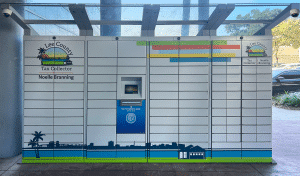
picture of the Smart Locker system at the downtown office

LEE COUNTY, FL (November 24, 2025) – The Lee County Tax Collector’s Office continues to enhance customer convenience with the expansion of its innovative SmartLocker system, adding locations in Cape Coral and Lehigh Acres.

SmartLockers provide a secure, self-service option for customers to pick up completed vehicle registration renewals 24/7. Customers can renew their registration online, choose a nearby SmartLocker location, and receive a digital code to retrieve their new yellow sticker once it’s ready.

Originally launched in 2023 at the Downtown Fort Myers office for vehicle dealers, the system expanded to the South Fort Myers location in 2024, offering registration renewal pickup for individual customers. The service has helped customers get their documents faster while freeing up appointment slots for others.

“SmartLockers are another way we’re combining technology and service to make life easier for our customers,” said Noelle Branning, Lee County Tax Collector. “Whether you’re a dealer dropping off work or a resident renewing a registration, our goal is to deliver 5-Star Service with options that fit your schedule.”

Customers simply go online to renew their registration and choose whether they want to pick it up or have it mailed to them. If they choose the SmartLocker option at our Downtown Fort Myers, Cape Coral, Lehigh Acres, or South Fort Myers offices, a code will be emailed to them when the registration is ready. Type the code in on the SmartLocker screen, and a locker will open to retrieve the sticker and paperwork. Orders placed by 3pm will be processed on the same business day (except for on early closure days which are scheduled for Wednesday, November 26, 2025, and Wednesday, December 31, 2025.) Customers closest to our Bonita and North office locations can pick up their registrations at the Check-in and Information desk during office hours.

This innovation supports the Tax Collector’s vision of being a role-model organization for excellence in providing government service, combining efficiency, security, and customer care.

To renew your registration online, visit LeeTC.com/pay-online.


Lee County Tax Roll Open for 2025 Collection

LEE COUNTY, FL (October 31, 2025) – Pumpkin spice, shorter days, and property taxes — some things are just signs of the season.

Today, more than 541,000 tax bills are being mailed to property and business owners in Lee County. Property owners can also access their bills electronically at LeeTC.com.

These bills reflect the value of the property as of January 1, 2025, when Florida law required them to be assessed.

To make paying property taxes easier and more convenient, the Tax Collector’s Office has added new options this year:

  • Two new 24/7 secure drop boxes have been installed at our Cape Coral and Lehigh Acres offices, joining the existing ones in Downtown Fort Myers and South Fort Myers. Customers can drop off payments anytime, allow five business days for processing, and print a receipt from our online portal.
  • Self-service kiosks at all six service centers allow customers to pay by credit card or
    e-check and print a receipt instantly.

In addition to these options, tax payments can still be made online at LeeTC.com, by mail, or over the phone.

“Our mission is to deliver 5-star service to our customers,” said Noelle Branning, Lee County Tax Collector. “We continue to invest in secure technology and flexible options that save people time and make paying property taxes simple and stress-free.”

Tax payments are due by March 31, 2026, but customers can take advantage of early payment discounts: 4% in November, 3% in December, 2% in January, and 1% in February.

Once received, all funds distributed to Lee County’s Levying Authorities to support essential services like fire rescue, law enforcement, and vital infrastructure including schools, roads, parks, and utilities.

For additional resources, including who to call with questions and property tax FAQs, visit LeeTC.com.

Property Tax Season is Here: What You Need to Know

Property tax season has arrived, and the Lee County Tax Collector’s Office is here to make the process as smooth and convenient as possible. Whether you’re a longtime property owner or paying your bill for the first time, here’s what you should know.

 Understanding Your Property Tax Bill

Tax Bills will be mailed out on October 31, 2025. If you’re unsure how your property taxes are calculated, check out this page for the formula. This resource is especially helpful for first-time homeowners or those new to Lee County.

 Frequently Asked Questions

Q: Why is my bill higher than my TRIM notice?
A: TRIM notices do not include non-ad valorem assessments (for services like stormwater or solid waste), so your final bill will be higher.

Q: Who do I contact about my property value?
A: Property values are set by the Lee County Property Appraiser. Visit leepa.org or call (239) 533-6100.

Q: How can I check if my payment went through?
A: Visit our Property Tax Payment Portal to search by name or address. Payments are updated within 2–3 business days once received.

Q: Who should I contact about assessments on my bill?
A: Questions about ad valorem or non-ad valorem assessments should be directed to your Levying Authority. The contact information is listed on the front of your tax bill.

Q: Why did I receive a full-year tax bill even though I recently purchased my home?
A: Property taxes are prorated at closing and billed to the current owner of record. Review your closing statement or contact your title company for details.

For more FAQs, visit leetc.com/property-tax-faqs.

Convenient Payment Options

Secure Drop-Boxes: Drop off your payment 24/7 at our Cape Coral, Lehigh Acres, Downtown Fort Myers, or South Fort Myers offices. Bonita Springs and North Fort Myers customers can use the “Appointment” line to leave payments at the Check-In and Information Desk during office hours.

Self-Service Kiosks: Pay and print your receipt instantly at any of our six service centers. Paying by e-check means no additional convenience fees.

Online Payments: Skip the trip by using our secure online payment portal to pay from home or the office and print your receipt anytime.

Discount Periods

November – 4% discount
December – 3% discount
January – 2% discount
February – 1% discount

Property Taxes are due by March 31.

Print a Receipt

You can print your property tax receipt from home in three easy steps:

  1. Visit our Property Tax Payment Website.
  2. Enter your name or address in the search field and select your record. The Account History will display the tax year and show paid.
  3. Click Print (PDF) to download and print your receipt.

The Lee County Tax Collector’s Office is committed to providing innovative, accessible, and exceptional service to our community. We’re here to help make your property tax experience easy and stress-free!


Property Tax FAQs

Sometimes, it can be difficult to know who to contact with questions regarding your property taxes. Below, we’ve collected the most common questions about your property taxes and related topics!

I need to change my mailing address – who do I call?
The Property Appraiser is responsible for maintaining property records, including the mailing address. You can make the change on their website, www.leepa.org or call their office at 239-533-6100.

I have a question about my exemptions – who do I call?
The Property Appraiser is responsible for maintaining property records, including the exemptions. You can visit their website for more information, www.leepa.org or call their office at 239-533-6100.

How do I print my property tax bill?
Visit our property tax payment website enter your name or address in the search field. Select your record. Click “Print (PDF)” which is located under the “Add to Cart” button. You can print a hard copy or save the file to your computer.

How do I know if my payment was received?
Visit our property tax payment website and enter your name or address in the search field. Select your record. The Account History will display the tax year and show PAID or UNPAID. Our office processes payments within two business days of receipt.

How can I get a receipt for my tax payment?
Visit our property tax payment website enter your name or address in the search field. Select your record. The Account History will display the tax year and show PAID. A receipt can be printed by clicking “Print (PDF).”

What if I’m entitled to a refund?
Refunds are issued in accordance with Florida Statutes. All refunds are returned to the original payer. If your taxes were paid through a mortgage escrow account, the original payer is your mortgage company.  Processing times may vary.

Can I still sign up for the installment payment plan for 2025?
Unfortunately, no. Applications for 2025 quarterly installment payments needed to be received in our office by April 30, 2025. You can submit an installment application for the 2026 tax year between November 2025 and April 30, 2026. Visit https://leetc.com/payment-options/ to learn more.

I no longer have a mortgage, why is a mortgage company listed on my tax notice?
If you have recently paid your mortgage in full, your property may have still been listed on their records. Contact the mortgage company to be sure there are no escrow funds allocated for the current tax year. Although the mortgage company is listed, you can still make the payment in November to receive the 4% discount.

Why did I get a tax bill for the full year when I just bought the property?
Property taxes are accounted for when closing on a property and charged or credited for your portion by the closing agent. The tax bill for the full year is sent to the current owner of record. Refer to your closing statement or call your title company or attorney if you have questions.

I sold this property, why am I getting a tax bill?
Annual tax bills are mailed to the owner of record as of the date the official tax role is sent to us from the Property Appraiser. Change of ownership is recorded with the Clerk of Court, then sent to the Property Appraiser, so it may be an issue of timing. You can forward the bill to the new owner or refer it to your closing agent.

Why did I get a Tangible Tax bill for my property?
Tangible Personal Property refers to assets used in a business or on the rental activity of a home. More specifically, it is furniture, fixtures, tools, machinery, household appliances, equipment, signs, leasehold improvements, supplies, and leased equipment – whatever is used to generate income. If you recently purchased a home that is no longer used for rental, contact the Property Appraiser’s office at 239-533-6140.
How to Read your Tax Bill

This year, more than 541,000 tax notices are being mailed to property and business owners in Lee County. Here is a guide to help you better understand how to read and understand the content of your tax bill.

Remember, annual taxes are determined using the following calculation:

Property Tax Calculation

All the above components are listed on your tax bill; you just need to know where to look.

Let’s work through the bill using this guide, starting from the upper left corner. There, your Account Number and Alternate Key are listed. Those will be useful if you need to contact our office, or the Property Appraiser’s Office.

To the right of the Account Number, are the site address and legal description of the property. Any changes to those will need to be made by contacting the Property Appraiser’s Office at www.leepa.org or 239-533-6100.

Moving further to the right is a QR Code. Scanning that code with your mobile phone’s camera will take you directly to your online account where you can pay your taxes.

Furthest to the right, in the upper corner of the bill is a list of values and exemptions. If you have questions about these, please contact the Property Appraiser’s Office at www.leepa.org or 239-533-6100.

The center of the page has a list of Levying Authorities along with their telephone numbers and rates. Any questions about the rates or services provided, need to be answered by calling the Levying Authority directly.

About 2/3 of the way down the page, on the right, above the perforation line, you will see the total amount of Ad Valorem and Non-Ad Valorem Taxes.

However, if paid early, there is a discount on that amount. Taxes paid in November receive a 4% discount, December a 3% discount, January a 2% and February is a 1% discount. Those amounts are reflected in the payment box on the bottom right of the notice.

Simply check the box next to the amount you wish to pay, tear off the coupon and return it, along with payment, in the envelope provided.

You can also pay online by scanning the QR code at the top of the bill, or by going to www.LeeTC.com and clicking Pay Online.

For additional guidance on which office to call with questions, please refer to the chart below, located on the back of the notice.

Property Tax Pop Quiz: Who are you going to call?

Pop Quiz!

You’ve received your tax bill and have a question about why your taxes are so high. Who should you call? The Tax Collector, the Property Appraiser, or the Taxing Authority?

The answer may not be what you think. To be fair, our system can be confusing, especially for residents coming from other states.

In Florida, the Constitution establishes two different elected positions to work with taxing authorities (i.e. the County Commission, City Councils or School District), to comprise our Property Tax System.

It’s like three legs of a stool.

The Property Appraiser values properties and prepares and certifies the tax roll (including assessed values, exemptions, legal description, assessed owners’ names and mailing addresses).

The Taxing Authorities establish millage rates and other assessments based on revenue needed to operate.

The Tax Collector receives all that information and prints and mails the tax bills, collects payment, and distributes the funds to the taxing authorities.

While we all work together, each plays a distinct role in the system.

So, the pop quiz question could have two answers: The Property Appraiser and/or the Taxing Authority.

For more information about each of our offices and who to contact with frequently asked questions, we’ve created the following chart:

This printable handout also explains the responsibilities of each office, so you know who to contact with questions!

Florida’s Property Tax System

Florida’s Property Tax System cycle starts every year on January 1 when Property Appraisers in Florida determine the assessed value of each parcel of property in their respective counties.

Three months later, on March 1, applications for exemptions, like homestead, that can reduce property taxes are due to the Property Appraiser.

Between March and July, there’s a flurry of activity as Property Appraisers certify the total taxable value of all the properties in the county. That information is then shared with the local taxing (also known as levying) authorities (i.e., County Commission and City Councils) to set proposed millage rates.

In August, Property Appraisers mail the Notices of Proposed Property Taxes (TRIM notices) to all property owners. These notices are not bills, but instead provide information about the value of a property, approved exemptions, and the amount that will be owed based on the proposed millage rates. If you have a question about your values or exemptions, now is the time to ask the Property Appraiser.

From September– early October, local taxing authorities hold public meetings to gather input before voting on a final millage rate. A list of public hearing dates, times, and locations are listed on your TRIM notice.

Once that process is complete, the Property Appraiser certifies the tax rolls and sends them to the Tax Collector who is statutorily responsible for printing and mailing the tax bills by November 1. (You can also download your tax bill or sign up to have it emailed to you directly.)

Your annual taxes are determined using the following calculation:

  • Your property value minus any exemptions, equals the taxable value of your home.
  • The taxable value is multiplied by the millage rates set by taxing authorities to determine your Ad-Valorem Taxes.
  • The Ad-Valorem Taxes are added to the Non-Ad Valorem assessments like storm water or solid waste, which are based on services, not the value of your property. The combined total determines your annual taxes.

Tax payments are due on March 31, but if you pay early, you receive a discount. Taxes paid in November receive a 4% discount, December is a 3% discount, January is 2% and February is 1%.

Once tax payments are received, the Tax Collector is responsible for distributing the dollars to the taxing authorities to pay for services like fire and rescue, law enforcement protection, schools, roads, utilities, and parks.

Come January, the cycle starts all over again! 

FLHSMV “Temporarily Pauses” Non-Immigrant CDL and CLP Issuance

Late afternoon September 30, the below bulletin was sent by the Florida Department of Highway Safety and Motor Vehicles (FLHSMV) regarding the issuance of Commerical Driver Licenses and Commercial Learner’s Permits to non-immigrants.

Until notified otherwise, the Lee County Tax Collector’s Office can only to issue CLPs or CDLs to US Citizens and US Permanent Residents.

We will share further updates as the FLHSMV provides them.

INFO 25-019 Temporary Pause on Non-Immigrant CLP and CDL Issuance

New Requirements for Teen Drivers

IMPORTANT UPDATE: The Florida Department of Highway Safety and Motor Vehicles has extended the deadline to take the TSLAE course until August 1. Teens taking the TSLAE course before August 1 will be exempt from the 6-hour Driver Education Course.

Effective July 1, 2025, all new teen drivers aged 15-17 must complete the following to receive a Florida Learner’s Permit:

  • 6-hour Driver Education Course
  • General Knowledge Exam
  • Real ID documents, proof of address, and parental consent

However, if your child completes a Traffic Law and Substance Abuse Education (TLSAE) course online before August 1, 2025—and within one year of applying for a learner’s permit—they won’t need to take the new 6-hour course. (Teens must be at least 14 to take the TLSAE.)

If your child already has a Learner’s Permit or gets one before August 1, they’re also exempt. Teens moving to Florida with a valid out-of-state permit or license don’t need to take the new course either.

So, if your teen has some time, now’s the perfect time to knock out that online TLSAE course!

To read the new law, visit https://www.flsenate.gov/Session/Bill/2025/994

Translate »
accessibility widget